What Is Masjid al-Haram? A Complete Guide to Makkah’s Grand Mosque
For every Muslim who travels to Makkah, Masjid al-Haram is the destination that everything else — the flight, the hotel, the taxi ride – is really about. It is the largest mosque in the world, built around the Kaaba, and it is the place toward which Muslims everywhere direct their prayers five times a day. If you’re preparing for Umrah or Hajj, understanding the mosque’s layout, history, and gates before you arrive makes the experience far less overwhelming once you’re standing in front of it for the first time.
This guide walks through what Masjid al-Haram is, how it grew into its current size, what you’ll find inside it, and practical tips for navigating it — including how it connects to the rest of Makkah for pilgrims arriving from hotels or the airport.
A Brief History of Masjid al-Haram
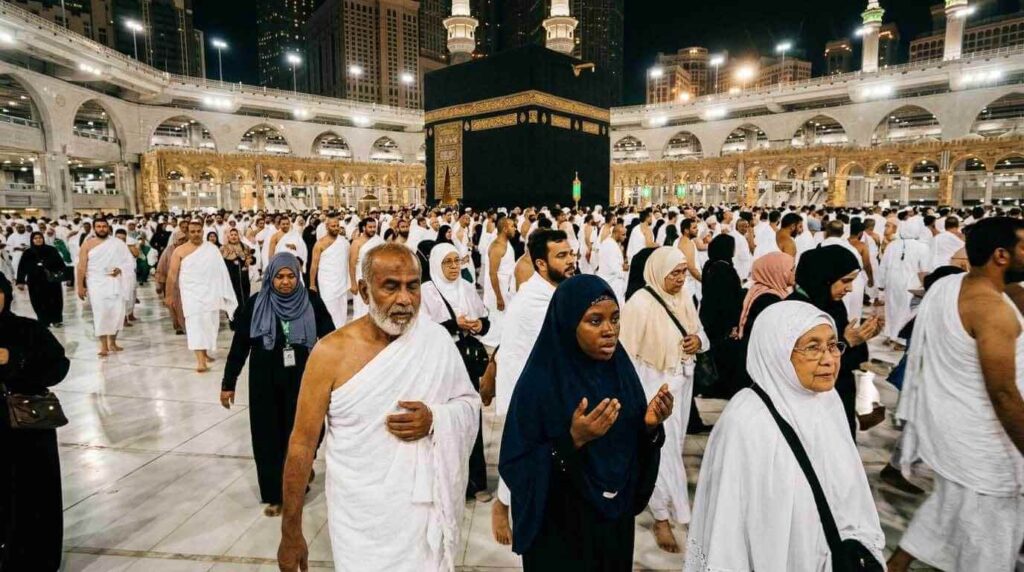
The Kaaba itself predates the mosque as a structure. For centuries, Muslims performed Tawaf around it in an open space with no defined walls. That changed during the caliphate of Umar ibn al-Khattab, who purchased and cleared the houses surrounding the Kaaba to stop pilgrims from spilling into residents’ property, then built a low wall around the newly cleared precinct — the first time Masjid al-Haram existed as an enclosed mosque rather than an open sanctuary. This first enclosure added roughly 1,500 square meters, bringing the total area to about 3,600 square meters.
Later caliphs continued expanding it. Uthman ibn Affan introduced covered porticoes for the first time, and by the time of Abd Allah ibn al-Zubayr the mosque’s area had grown to roughly 7,465 square meters. Centuries later, in the Ottoman era, Sultan Murad IV carried out a significant renovation that included rebuilding the Kaaba itself.
The mosque’s size stayed relatively unchanged for a long time after that, until the Saudi era brought a series of major expansions:
- First Saudi expansion (1955–1973), under King Saud — the mosque grew from around 27,000 to roughly 152,000 square meters, raising capacity to about 500,000 worshippers. This expansion also brought the Mas’a — the walkway between Safa and Marwah — inside the mosque for the first time.
- Second Saudi expansion (1982–1988), under King Fahd — surrounding buildings were cleared to add a new wing and outdoor prayer space, along with escalators and pedestrian tunnels to manage growing crowds.
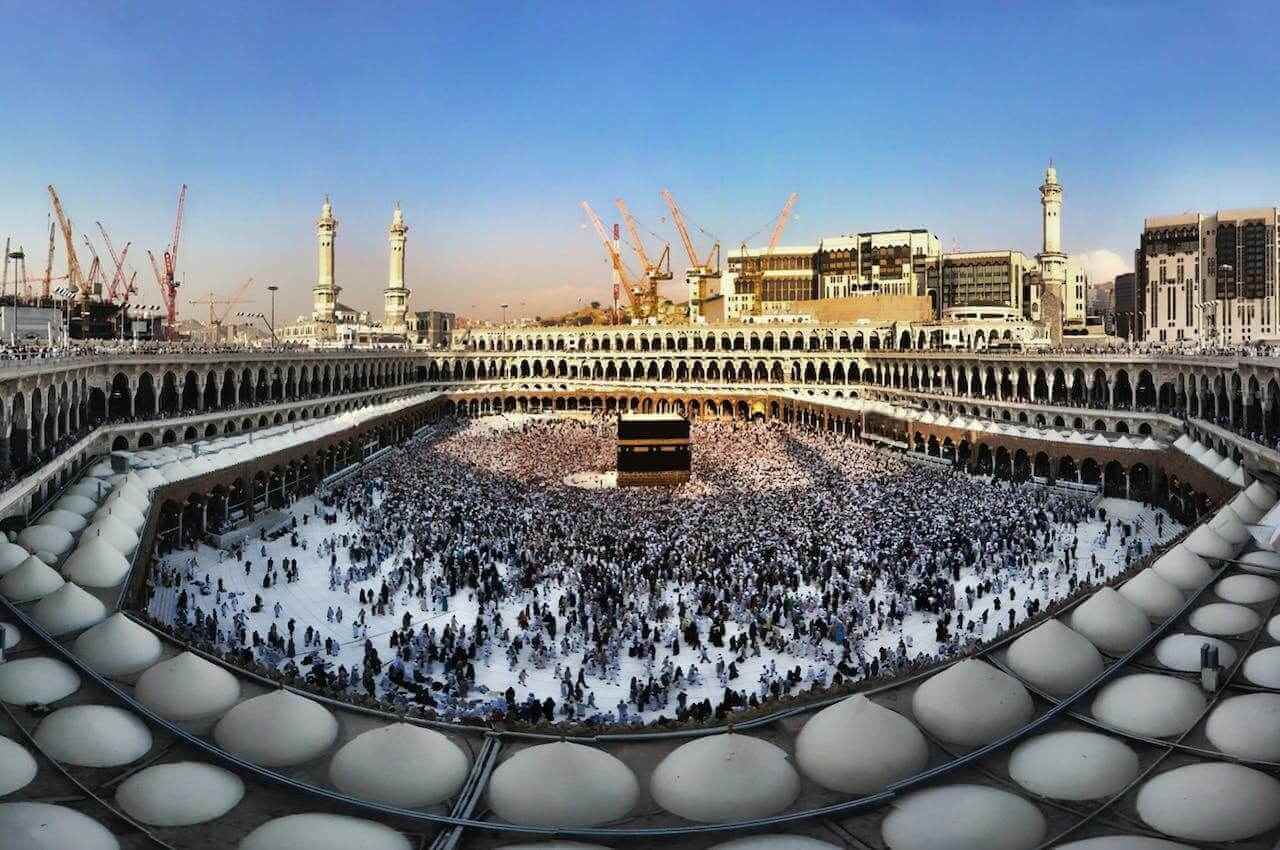
- Third Saudi expansion, the King Abdullah Expansion (announced 2008, continued under King Salman) — this added roughly 400,000 square meters to the north and northwest of the mosque, expanded the Mataf around the Kaaba, and was designed to lift total capacity from around 770,000 to over 2.5 million worshippers. The Abraj Al Bait complex and its Clock Tower were completed alongside this expansion in 2012. Work was paused in 2015 after a crane accident and resumed in 2017.
Today, Masjid al-Haram covers approximately 356,000 square meters (about 88 acres), has 13 minarets, and can accommodate several million worshippers during peak seasons such as Ramadan and Hajj.
Inside Masjid al-Haram: The Mataf, Zamzam, and Key Areas
Once you’re inside the mosque, a few areas matter more than the rest:
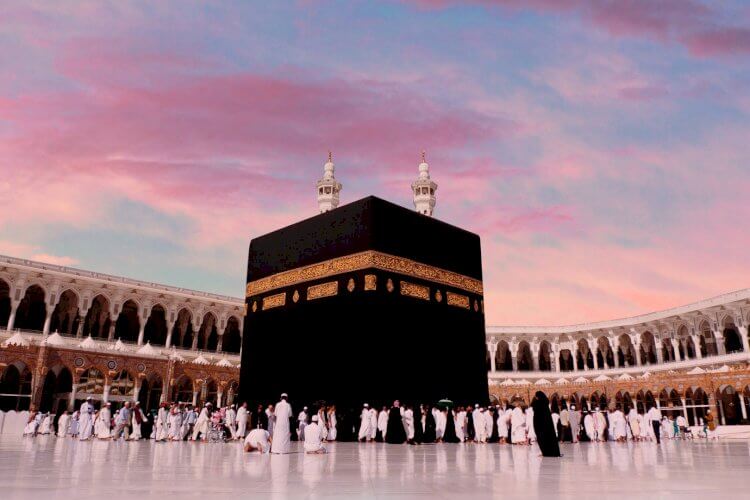
The Kaaba and the Mataf. The Kaaba sits at the center of the mosque, and the paved circular area immediately around it — where pilgrims perform Tawaf — is called the Mataf. During busy periods, the ground-floor Mataf is often reserved for pilgrims in Ihram, while others perform Tawaf from the upper floors or roof, which are connected by escalators and elevators.
Maqam Ibrahim. A small enclosed structure near the Kaaba marking the stone on which Ibrahim is believed to have stood while building it. After completing Tawaf, pilgrims traditionally pray two rak’ahs near this spot, or elsewhere in the mosque if it’s crowded.
Safa and Marwah (the Mas’a). This covered corridor connects two small hills, Safa and Marwah, where pilgrims perform Sa’i — walking back and forth between them seven times as part of Umrah and Hajj. It has its own ground floor and upper levels to handle crowd volume.
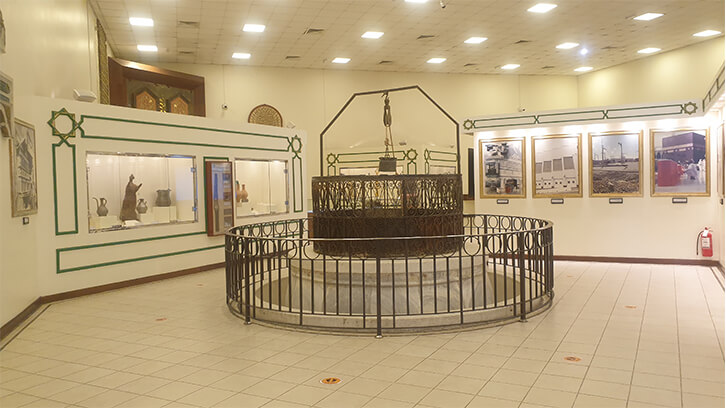
The Zamzam well and water points. Zamzam water is drawn from a well beneath the mosque complex and distributed through thousands of coolers and dispensers placed throughout the mosque and its courtyards — this water is for drinking, not for wudu or general washing, and staff regularly remind visitors of this. Dedicated ablution (wudu) facilities are located separately, including areas near the King Fahd expansion, the Mas’a near Marwah, and the mosque’s eastern and western courtyards.
The Gates of Masjid al-Haram – And Which One You’ll Actually Use
One detail that surprises first-time visitors: Masjid al-Haram has well over 200 gates. Estimates vary by source — some put the commonly used entrances at around 95–120, while a full architectural count (including smaller doors) is cited as high as 262. In practice, you don’t need to know all of them; you need to know a handful of major ones and remember which one you used, since it becomes your reference point for finding your way back to your group or your hotel afterward.
A few gates matter most for pilgrims:
- King Abdulaziz Gate (Gate 1) — one of the largest and most frequently used gates, offering a direct visual approach toward the Kaaba. Pilgrims often begin Tawaf near this entrance, and it’s a common reference point for those staying in hotels along Ibrahim Khalil Road.
- King Fahd Gate and King Abdullah Gate — both large modern entrances built during the later Saudi expansions, designed with wide corridors and cooling systems for heavy crowds.
- Bab Al-Umrah (Umrah Gate) and Bab Al-Fath — commonly used entry points, particularly during Umrah season.
- Safa Gate and Marwah Gate — positioned near the start and end points of the Sa’i corridor, so pilgrims heading straight into Sa’i after Tawaf often use these rather than crossing back through a crowded prayer hall.
- Ajyad Gate and Ibrahim Gate — on the western side and near the Kaaba respectively, convenient for pilgrims staying in the Ajyad hotel district.
A practical habit: note your gate number or name (most are marked clearly) the moment you walk in. During peak hours, the mosque can be disorienting even for people who’ve visited before, and remembering “I came in through King Abdulaziz Gate” is far more useful than trying to retrace your steps by landmark alone.
Tawaf, Sa’i, and What Happens Inside
For pilgrims performing Umrah, the two central rituals inside Masjid al-Haram are Tawaf and Sa’i.
Tawaf is performed by walking counter-clockwise around the Kaaba seven times, beginning and ending at the corner containing the Black Stone. Many pilgrims recite supplications or verses of the Qur’an during the circuits. After finishing, it’s customary to pray two rak’ahs near Maqam Ibrahim, or in any available space if the area is crowded.
Sa’i follows Tawaf and involves walking between Safa and Marwah seven times along the Mas’a corridor. Escalators and elevators connect to upper floors of the Mas’a, which helps during busier periods.
Both rituals are physically demanding, especially in Makkah’s heat and during high season, so pacing yourself and staying hydrated with the widely available Zamzam water matters more than people expect on their first visit.
Etiquette and Practical Tips for Visitors
- Dress modestly. Loose, modest clothing is expected of everyone inside the mosque, and those in Ihram follow its specific dress requirements.
- Move with the crowd, not against it. Tawaf and Sa’i both have a set direction of flow; cutting across it, especially near the Mataf, creates congestion and safety risks.
- Keep noise and photography considerate. Many pilgrims are in a state of deep concentration; avoid loud conversations or photographing people without their consent.
- Use Zamzam water for drinking only, and dispose of cups in the bins provided rather than leaving them near prayer areas.
- Plan around peak times. Crowds are heaviest after the five daily prayers and during Ramadan and Hajj season — arriving 30–45 minutes before a prayer secures a better spot but also means denser crowds getting in and out.
- Agree on a meeting point with anyone you’re traveling with before entering, since phone signal inside the mosque can be unreliable during peak hours.
Getting to Masjid al-Haram
Most pilgrims stay in hotels within walking distance of the mosque — commonly around Ajyad, Ibrahim Khalil Road, or the Abraj Al Bait/Clock Tower area — and simply walk to whichever gate is closest. If your hotel is further out, or you’re arriving directly from King Abdulaziz International Airport in Jeddah, a private hotel-to-Haram transfer is generally more comfortable than public transport, particularly with luggage or when traveling as a family.
If you’re arriving from Jeddah Airport, a fixed-rate private taxi can take you straight from the arrivals hall to your Makkah hotel, so you can drop your bags before heading to the mosque. And once your time in Makkah is done, the same kind of door-to-door private transfer applies for the onward journey to Madinah or back to the airport — no need to navigate stations or shared transport with your luggage in tow. You can arrange this in advance over WhatsApp at +966574915372.
FAQs
What is Masjid al-Haram?
Masjid al-Haram is the Grand Mosque of Makkah, built around the Kaaba, and is considered the holiest site in Islam. Muslims worldwide face toward it during prayer.
How old is Masjid al-Haram?
The mosque as an enclosed structure dates to around 638 CE, when Caliph Umar built the first wall around the Kaaba precinct, though the Kaaba itself is far older.
How many gates does Masjid al-Haram have?
Estimates vary — commonly cited figures range from roughly 95–120 frequently used entrances up to over 200 gates in total when every door is counted.
Which gate should I use for Tawaf?
King Abdulaziz Gate, King Fahd Gate, and Bab Al-Umrah are among the most direct routes toward the Mataf area where Tawaf takes place.
How big is Masjid al-Haram?
The mosque covers approximately 356,000 square meters (about 88 acres) and can hold several million worshippers during peak periods.
What is the Mataf?
The Mataf is the paved area immediately surrounding the Kaaba where pilgrims perform Tawaf.
Can non-Muslims enter Masjid al-Haram?
No. Makkah, including Masjid al-Haram, is restricted to Muslims only under Saudi law.
What should I wear inside the mosque?
Modest, loose-fitting clothing is expected of all visitors; those in Ihram follow its specific requirements.
Is Zamzam water safe to drink?
Yes, Zamzam water is tested regularly and distributed through dedicated dispensers throughout the mosque specifically for drinking.
What is Sa’i and where does it happen?
Sa’i is the ritual of walking between the hills of Safa and Marwah seven times, performed in the covered Mas’a corridor within the mosque.
How do I find my way back to my hotel after visiting the mosque?
Remember the name or number of the gate you entered through – it’s the most reliable reference point, since the mosque has hundreds of entrances and internal landmarks can look similar during busy periods.
When is Masjid al-Haram least crowded?
Crowds are generally lighter between the daily prayers and outside of Ramadan and Hajj season, though the mosque is rarely empty given its role as a place of continuous worship.
Can I take a taxi directly from Jeddah Airport to Masjid al-Haram?
You can book a private transfer directly from Jeddah Airport to your Makkah hotel near the mosque; from there it’s typically a short walk to one of the main gates.
Is there a dress code for the Mataf specifically?
The same modesty requirements apply throughout the mosque, including the Mataf, with additional Ihram-specific rules for those performing Umrah or Hajj.
What should first-time visitors know before entering?
Agree on a meeting point with your group, note your entry gate, stay hydrated, and expect to move with the crowd’s flow rather than against it, especially near the Mataf and Mas’a.