
Masjid an-Nabawi: A Complete Guide to the Prophet’s Mosque in Madinah
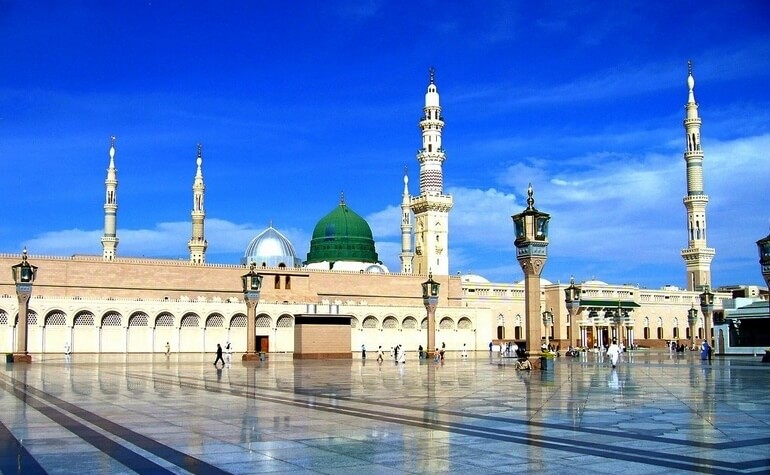
Masjid an-Nabawi, widely known as the Prophet’s Mosque, stands at the heart of Madinah as the second holiest site in Islam, after Masjid al-Haram in Makkah. For most visitors, it is also the emotional center of a trip to Madinah — the place built by Prophet Muhammad ﷺ himself, and the resting place of his tomb. Understanding its history, its current layout, and how to actually visit the Rawdah today makes the experience far smoother and more meaningful.
What Is Masjid an-Nabawi?
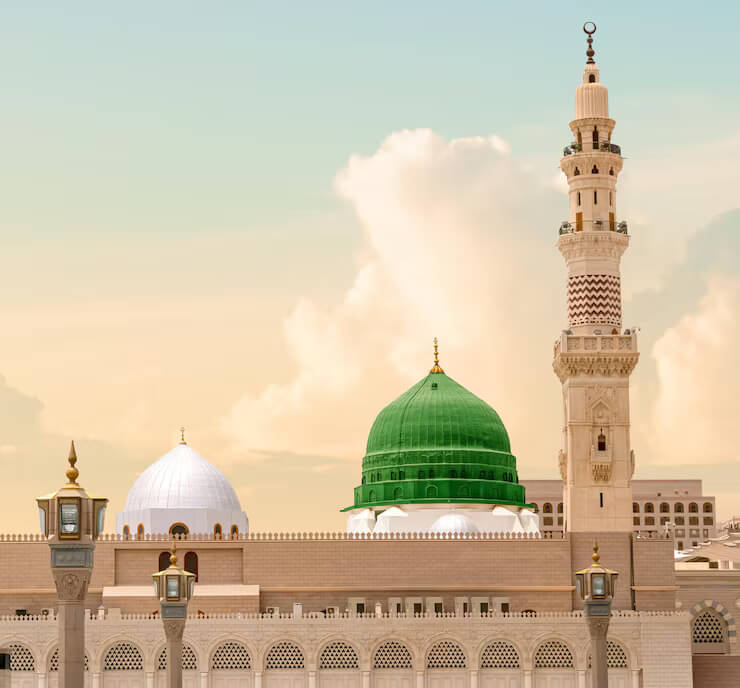
Masjid an-Nabawi is the mosque Prophet Muhammad ﷺ established in Madinah shortly after the Hijrah — his migration from Makkah in 622 AD. Unlike Masjid al-Haram, which centers on the Kaaba, Masjid an-Nabawi’s spiritual focus is the Prophet’s ﷺ own mosque, his minbar (pulpit), and his burial chamber, which today sits beneath the mosque’s famous Green Dome.
For Muslims, praying inside Masjid an-Nabawi carries special reward, and visiting it — while not an obligatory pilgrimage rite the way Tawaf at the Kaaba is — is one of the most cherished parts of any Umrah or Hajj trip that includes Madinah.
The History of Masjid an-Nabawi
The Original Mosque (622 AD)
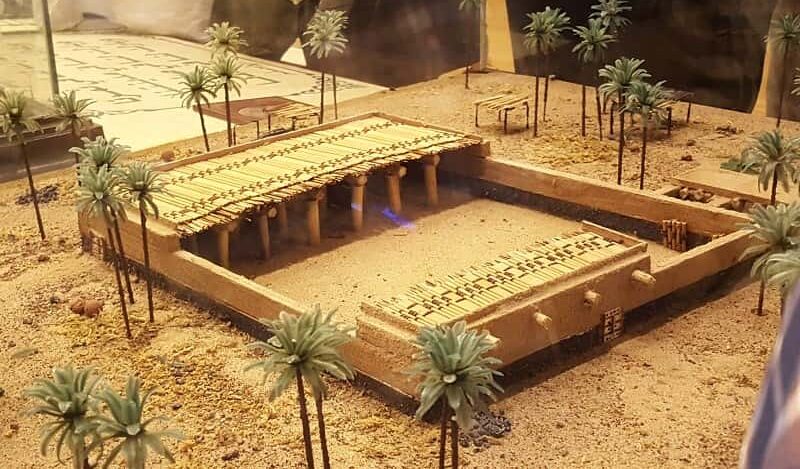
When the Prophet ﷺ arrived in Madinah, he purchased a plot of land and built a simple structure: palm-trunk columns, mud-brick walls, and a roof of palm leaves. It was never meant to be decorative. It served as a place of prayer, a community center, and a school — and its modesty is part of what makes today’s vast complex remarkable by comparison. The mosque originally had just three gates.
Expansions Under the Early Caliphs and Ottomans
Caliph Umar ibn al-Khattab expanded the mosque and increased its gates from three to six, adding Bab as-Salam on the south-western corner. Later Umayyad and Abbasid rulers, and eventually the Ottomans, continued to enlarge and rebuild it. Sultan Mahmud II completed the “Purified Residence” over the Prophet’s ﷺ tomb in 1817 and topped it in 1837 with the green-painted dome that gives the mosque its most recognizable feature today. A later Ottoman sultan, Abdulmecid I, carried out a thirteen-year reconstruction using red stone that expanded the mosque’s floor area while carefully preserving the tomb, the pulpit, and the historic prayer niche.
The Saudi Expansions
The most dramatic growth happened under Saudi rule. The first Saudi expansion (1948–1955) roughly doubled the mosque’s area from the Ottoman-era footprint and raised its worshipper capacity into the tens of thousands, while retaining the four original Ottoman minarets and adding four more.
The second major Saudi expansion, carried out under King Fahd between 1985 and 1994, was far larger. It added a full roof-level prayer area (using movable, retractable domes for shade and ventilation), extensive underground facilities, and brought the mosque’s total footprint to roughly 300,000–400,000 square meters, with capacity cited at around 700,000 worshippers.
A third, ongoing expansion — begun under King Abdullah and continued under King Salman — is the largest in the mosque’s history. It has added new prayer halls, movable glass domes, elevators and electric staircases for accessibility, and shaded courtyards fitted with mechanized umbrellas similar to those at Masjid al-Haram. Because this expansion has been carried out in phases and paused and resumed at different points, published figures for its final size and capacity vary between sources; the project’s stated goal is to push worshipper capacity well beyond a million during peak seasons.
Throughout every expansion, one detail has stayed constant: the Green Dome, the Rawdah, and the original Qibla wall have been deliberately preserved rather than rebuilt.
How Big Is Masjid an-Nabawi Today?

If you compare articles about Masjid an-Nabawi’s size, you’ll notice the numbers don’t match — some cite around 400,000 square meters, others cite figures closer to 500,000, and capacity estimates range from roughly 700,000 to well over a million worshippers. This isn’t an error on any one source’s part; it reflects the mosque’s layered construction history. Some figures describe only the enclosed prayer hall, others include the surrounding courtyards, and others describe the completed second Saudi expansion rather than the still-evolving third expansion. When comparing sources, it helps to check which expansion phase a figure is describing rather than assuming one “correct” number exists.
What is consistent: the mosque today has ten minarets, multiple levels including a roof prayer area, and courtyards designed to handle enormous crowds during Ramadan, Hajj, and peak Umrah season.
The Rawdah al-Sharifah and the Green Dome
What Is the Rawdah?
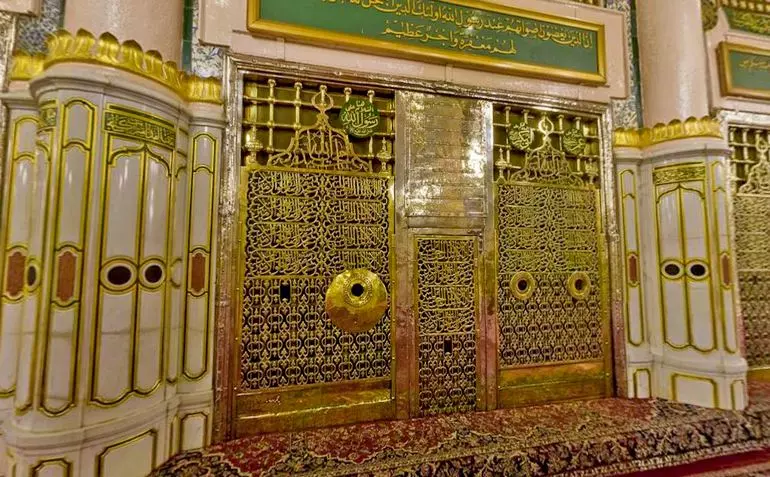
The Rawdah al-Sharifah — often called Riyad ul-Jannah, or the “Garden of Paradise” — is the area between the Prophet’s ﷺ minbar and his burial chamber. It is a relatively small space by comparison with the rest of the mosque, and it’s the single spot most visitors most want to reach, based on a hadith describing it as one of the gardens of Paradise.
The Green Dome and the Sacred Chamber
The Sacred Chamber (Al-Hujrah al-Sharifah) sits beneath the Green Dome and contains the graves of Prophet Muhammad ﷺ, Abu Bakr, and Umar ibn al-Khattab. The chamber itself is not open for entry; visitors experience it by praying in the adjoining Rawdah and offering salutations from there. Despite every major expansion around it, the dome’s position and form have remained unchanged since the Ottoman era.
How to Visit the Rawdah (Nusuk Permit Guide)
This is where planning matters most, and it’s worth doing before you land in Madinah. As of 2026, entry to the Rawdah requires a free digital permit booked through the Nusuk app, the official platform of the Saudi Ministry of Hajj and Umrah. There is no walk-in access — arriving without a permit means you won’t be able to enter.
Here’s what to expect:
- Set up your Nusuk account early, ideally as soon as your Umrah or tourist visa is issued, using your passport and visa details.
- Rawdah slots are released roughly 7–14 days in advance of the visit date, though this window can shrink to as little as 3–5 days during Ramadan or Hajj season. Check the app daily, as new slots are often added overnight and can be booked within minutes.
- Men and women have separate booking sections and separate visiting hours. Each traveler generally needs their own individual permit, even when one family member manages all the bookings.
- You get roughly 10–15 minutes inside the Rawdah, strictly enforced by mosque staff, so it helps to know in advance what you want to pray and say.
- Each person can generally book only one Rawdah slot per 365 days, and this applies across trip types — so if you already visited during an earlier Umrah this year, you may not be able to book again on a return trip within the same 12 months.
- Arrive around 30 minutes before your slot, with your QR code ready and loaded (mobile data is more reliable than relying on hotel Wi-Fi), since the walk from the entrance to the Rawdah and the security checks take time.
Gates and Getting Oriented Inside the Mosque
Masjid an-Nabawi has 42 named gates in its current form, each tracing back through different periods of the mosque’s expansion. You won’t need to know all of them, but a few are worth remembering:
- Bab as-Salam (Gate of Peace) is one of the oldest and most spiritually significant entrances, traditionally used by pilgrims performing Ziyarat.
- Bab an-Nisa (the Women’s Gate), on the eastern wall, was designated by Caliph Umar specifically for women and remains a key women’s access point today, close to the Rawdah.
- The King Fahd Gate, added during the second Saudi expansion, is one of the largest modern entrances.
- For Rawdah visits specifically, your Nusuk permit will specify which entrance to use — commonly a gate near the men’s or women’s sections closest to the Rawdah — so always check your permit rather than assuming.
If you lose track of your bearings inside such a large complex, note the number of the gate you entered through; it makes finding your way back to your hotel or your group much easier.
Etiquette for Visiting Masjid an-Nabawi
- Dress modestly, and keep voices low — the mosque is a place of prayer for people from every part of the world praying and reflecting at the same time.
- Follow staff instructions at the Rawdah without pushing or lingering past your allotted time; the space is shared by enormous numbers of visitors every day.
- Large bags generally aren’t permitted in the Rawdah queue, so plan what you carry accordingly.
- Photography is generally discouraged inside the prayer halls and especially near the Rawdah, out of respect for worshippers.
Nearby Ziyarat Sites Worth Visiting
Many visitors combine their Masjid an-Nabawi visit with other historically significant sites nearby, including Quba Mosque (the first mosque built in Islam, roughly 6 km away), Jannat al-Baqi cemetery adjacent to the mosque itself, and Mount Uhud. These sites are commonly grouped into a single Madinah Ziyarat itinerary, since they’re spread across the city rather than walkable from the mosque directly.
Getting to Masjid an-Nabawi
However you arrive in Madinah, most trips ultimately converge on this mosque. Travelers coming directly from Makkah typically arrive by private taxi or the Haramain High-Speed Train, while those flying in through Jeddah usually book a private transfer from Jeddah Airport straight to a Madinah hotel near the mosque. For the return leg, or for exploring nearby Ziyarat sites in a single trip, a private taxi with hotel pickup remains the most flexible option, since it runs on your schedule rather than a fixed timetable.
FAQs
What is Masjid an-Nabawi?
Masjid an-Nabawi, or the Prophet’s Mosque, is the mosque Prophet Muhammad ﷺ built in Madinah after the Hijrah in 622 AD. It is the second holiest site in Islam and contains the Prophet’s ﷺ burial chamber beneath the Green Dome.
How old is Masjid an-Nabawi?
The original mosque dates to 622 AD, making it well over 1,400 years old, though the structure standing today is the result of many expansions, most recently under the Saudi government.
How many gates does Masjid an-Nabawi have?
The mosque currently has 42 named gates, though the number has changed many times throughout its history as the mosque was rebuilt and enlarged.
Do I need a permit to visit the Rawdah?
Yes. Entry to the Rawdah al-Sharifah requires a free digital permit booked through the official Nusuk app. There is no walk-in access as of 2026.
How far in advance should I book a Rawdah permit?
Slots typically release 7–14 days before the visit date, shrinking to 3–5 days during Ramadan or Hajj season. It’s best to start checking the app about 10 days ahead of your intended visit.
How long can I stay inside the Rawdah?
Roughly 10–15 minutes, strictly enforced by mosque staff due to the volume of visitors.
Can I visit the Rawdah more than once during my trip?
Generally no — most travelers are limited to one Rawdah booking per 365 days, across Umrah, Hajj, and tourist visits alike.
Which gate should women use to enter Masjid an-Nabawi?
Bab an-Nisa (the Women’s Gate) on the eastern wall is a traditional women’s access point, though your Nusuk Rawdah permit will specify the exact entrance to use for your visit.
What is the Green Dome?
The Green Dome marks the location of the Prophet’s ﷺ burial chamber, which also contains the graves of Abu Bakr and Umar ibn al-Khattab. It was completed by the Ottomans in the early 19th century and has remained unchanged through every later expansion.
How big is Masjid an-Nabawi today?
Estimates vary depending on which expansion phase is being described, but the mosque today spans several hundred thousand square meters, includes a roof-level prayer area, ten minarets, and is designed to accommodate well over a million worshippers during peak seasons.
Is Masjid an-Nabawi the same as Masjid al-Haram?
No. Masjid al-Haram is in Makkah and surrounds the Kaaba; Masjid an-Nabawi is in Madinah and centers on the Prophet’s ﷺ own mosque and burial place. They are the two holiest sites in Islam, with Masjid al-Haram considered the first.
What should I visit near Masjid an-Nabawi?
Quba Mosque, Jannat al-Baqi cemetery, and Mount Uhud are among the most commonly visited nearby sites, typically covered as part of a Madinah Ziyarat trip.
How do I get from Makkah to Masjid an-Nabawi?
Most travelers arrive in Madinah by private taxi or the Haramain High-Speed Train, then continue to their hotel near the mosque. A private taxi offers direct, door-to-door travel without needing a separate transfer at either end.
Is entry to Masjid an-Nabawi free?
Yes, entry to the mosque itself is free and open during regular hours. Only the Rawdah requires a booked permit.