List of Makkah Ziyarat Places: A Complete Guide for Pilgrims
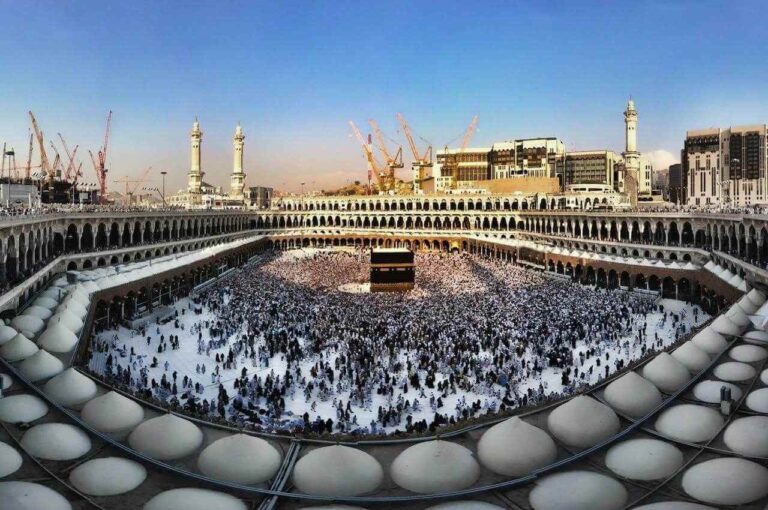
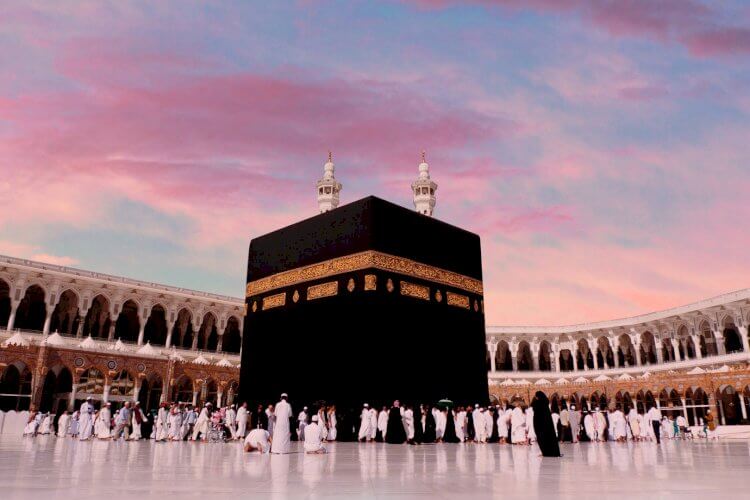
Beyond the Tawaf and Sa’i performed inside Masjid al-Haram, many pilgrims set aside time during their Umrah or Hajj trip to visit the historic sites scattered around Makkah. These visits are known as Ziyarat – a practice that isn’t a formal pilgrimage rite, but one that connects visitors to the earliest history of Islam.
This guide lists the main Ziyarat places in Makkah, organized by type, along with practical distance and access information to help you plan your visit.
What Is Ziyarat and Why Pilgrims Visit These Sites
Ziyarat simply means “visitation” in Arabic. In the context of Makkah, it refers to visiting places connected to the Prophet Muhammad ﷺ, his companions, and the events of early Islamic history – caves where revelation took place, mountains associated with the Hajj, and burial grounds of early Muslims. None of these visits are obligatory parts of Umrah or Hajj, and no specific rituals are required at most of them. Pilgrims generally visit out of historical interest and to reflect on the events tied to each location.
Ziyarat Sites Near Masjid al-Haram
Jannat al-Mu’alla
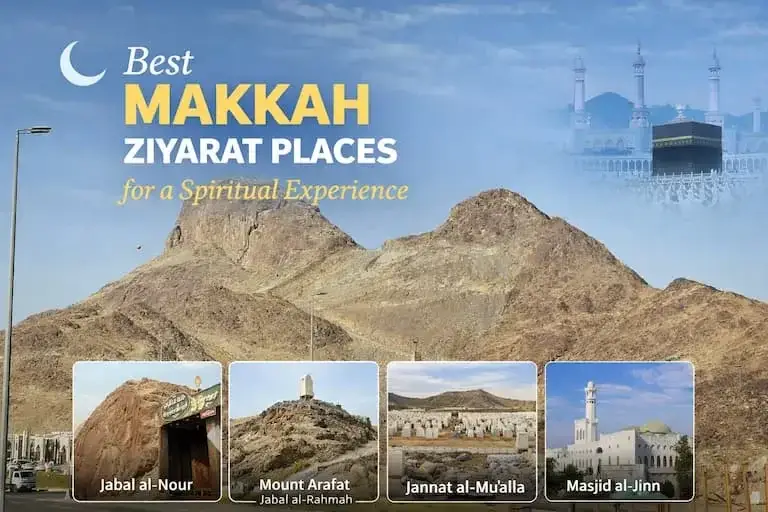
Jannat al-Mu’alla is Makkah’s historic cemetery, located roughly a kilometer from Masjid al-Haram. It’s the burial place of several of the Prophet’s ﷺ relatives, including his first wife, Khadijah bint Khuwaylid. The site is close enough to reach on foot from most hotels in the central Haram area, though many pilgrims combine it with a Ziyarat car trip that also covers the mountain sites further out.
Masjid al-Jinn
Also known as Masjid al-Bay’ah, this small mosque sits about a kilometer from the Haram and marks the spot associated with a group of jinn accepting Islam after hearing the Prophet ﷺ recite Qur’an, an event referenced in the Qur’an itself (Surah al-Jinn). It’s a brief stop, often paired with Jannat al-Mu’alla since both are close together and close to the Haram.
Mountains and Caves of Makkah
Jabal al-Nour and the Cave of Hira
Jabal al-Nour (“Mountain of Light”) stands about 4 kilometers north of the Haram and holds the Cave of Hira near its summit – the site where the Prophet ﷺ is believed to have received the first revelation of the Qur’an.
Reaching the cave means climbing roughly 1,200 uneven stone steps, which typically takes 60–90 minutes each way depending on fitness level and crowd size. It’s a meaningful visit for most able-bodied pilgrims, but not a realistic option for anyone with mobility limitations, young children, or elderly travelers who aren’t used to a sustained climb. A paved road runs to the base, where vehicles can park before the climb begins.
Jabal Thawr and the Cave of Thawr
Jabal Thawr lies south of Makkah, at a driving distance that’s commonly cited anywhere between 4 and 12 kilometers depending on the route taken and where distance is measured from. This is the cave where the Prophet ﷺ and Abu Bakr took shelter for three days during the Hijrah (migration) to Madinah, while being pursued by the Quraysh.
The climb here is steeper and more strenuous than Jabal al-Nour, generally taking 60–90 minutes up a rougher, less maintained path, and is genuinely only advisable for physically fit visitors. Many pilgrims choose to view Jabal Thawr from the base and skip the ascent.
Hajj-Related Sites (Seasonal Access)
These three sites form the core of the Hajj rituals and are usually seen simply as scenery or for reflection outside of the Hajj season, since normal public access and the tent infrastructure that defines them are tied to the Hajj period itself.
Mina
Mina, roughly 6–7 kilometers from the Haram, is known as the “tent city” where pilgrims stay during the days of Hajj and perform the symbolic stoning of the Jamarat pillars. Outside Hajj season, the area can be viewed from the road, but the tent city itself is set up and dismantled around the Hajj dates.
Muzdalifah
Located about 10–12 kilometers from Makkah, between Mina and Arafat, Muzdalifah is where pilgrims spend a night under the open sky during Hajj and collect pebbles for the Jamarat. Like Mina, it’s primarily relevant and accessible in the context of the Hajj season itself.
Arafat (Jabal ar-Rahmah)
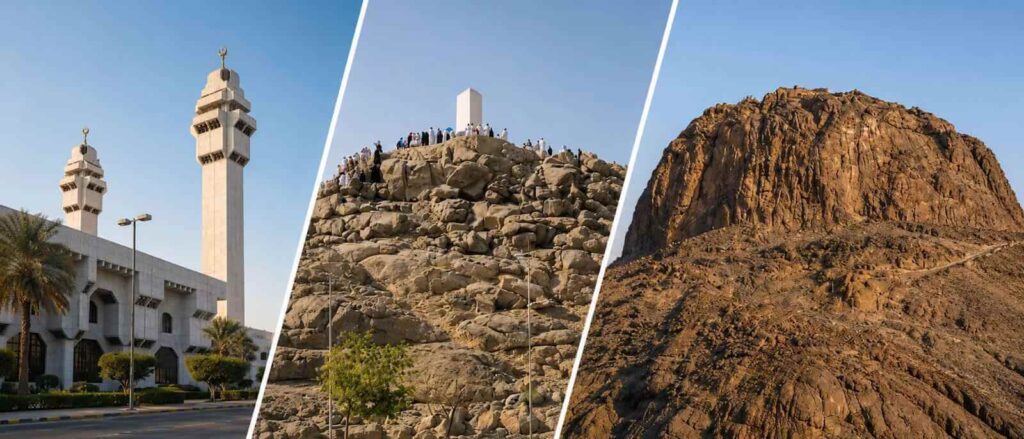
Arafat sits about 20–22 kilometers east of Makkah and is home to Jabal ar-Rahmah (“the Mount of Mercy”), where the Prophet ﷺ delivered his Farewell Sermon. The Day of Arafat is considered the most important day of Hajj. Outside the Hajj period, some pilgrims still drive out to see the plain and the mount, though the religious significance of “standing at Arafat” applies specifically to the Hajj ritual.
Masjid Aisha (Taneem) – the Miqat for a Second Umrah
Masjid Aisha, in the Taneem area about 7–8 kilometers from the Haram, is the nearest Miqat (entry boundary for Ihram) to Makkah. Pilgrims who want to perform a second or subsequent Umrah during their stay travel here to change into Ihram and make their intention before returning to the Haram. It’s one of the most frequently visited Ziyarat stops precisely because it serves a practical purpose rather than being purely historical.
Makkah Ziyarat Places at a Glance
| Site | Category | Approx. Distance from Haram | Access | Best For |
|---|---|---|---|---|
| Jannat al-Mu’alla | Cemetery | ~1 km | Walkable | All pilgrims |
| Masjid al-Jinn | Historic mosque | ~1 km | Walkable | All pilgrims |
| Jabal al-Nour / Cave of Hira | Mountain, cave | ~4 km | Vehicle + ~1,200-step climb | Able-bodied pilgrims |
| Jabal Thawr / Cave of Thawr | Mountain, cave | ~4–12 km | Vehicle + strenuous climb | Physically fit pilgrims |
| Masjid Aisha (Taneem) | Miqat, mosque | ~7–8 km | Vehicle | Pilgrims doing a second Umrah |
| Mina | Hajj site | ~6–7 km | Vehicle | Seasonal (Hajj) / viewing |
| Muzdalifah | Hajj site | ~10–12 km | Vehicle | Seasonal (Hajj) / viewing |
| Arafat / Jabal ar-Rahmah | Hajj site | ~20–22 km | Vehicle | Seasonal (Hajj) / viewing |
Distances are approximate and will vary slightly depending on which point in the Haram area they’re measured from and the specific road taken.
How Pilgrims Get Between Ziyarat Sites
Given that most of these sites are spread several kilometers apart and outside comfortable walking range (with the exception of Jannat al-Mu’alla and Masjid al-Jinn), a private vehicle is the most practical way to see more than one or two sites in a single outing.
Many pilgrims book a single Makkah Ziyarat taxi trip that covers the mountains, Masjid Aisha, and a drive past the Hajj sites in one half-day booking, rather than arranging separate trips for each location. This also means the driver can wait at each stop – useful at Jabal al-Nour or Jabal Thawr, where the visit includes time for the climb, and essential at Masjid Aisha if you’re changing into Ihram there.
FAQs
What are the main Ziyarat places in Makkah?
The most commonly visited sites are Jabal al-Nour (Cave of Hira), Jabal Thawr (Cave of Thawr), Jannat al-Mu’alla, Masjid al-Jinn, Masjid Aisha in Taneem, and the Hajj-related sites of Mina, Muzdalifah, and Arafat.
Is Ziyarat a required part of Umrah or Hajj?
No. Visiting these sites is not a formal ritual requirement of either Umrah or Hajj – it’s a widely practiced tradition rather than an obligation.
How far is the Cave of Hira from Masjid al-Haram?
Jabal al-Nour, which holds the Cave of Hira, is about 4 kilometers from the Haram, followed by a climb of roughly 1,200 steps to reach the cave itself.
Can I visit Mina, Muzdalifah, and Arafat outside of Hajj season?
The areas can generally be seen from the road, but the tent city at Mina and the full pilgrim infrastructure at these sites are specifically tied to the Hajj period.
How difficult is the climb to the Cave of Thawr?
It’s considered more strenuous than Jabal al-Nour, with a steeper, less maintained path that typically takes 60–90 minutes each way. It’s best suited to physically fit visitors.
Why do pilgrims visit Masjid Aisha in Taneem?
It’s the closest Miqat to Makkah, so pilgrims who want to perform an additional Umrah during their trip go there to enter into Ihram before returning to the Haram.
Can Ziyarat sites be visited on foot?
Jannat al-Mu’alla and Masjid al-Jinn are close enough to walk to from most central hotels. The rest are several kilometers out and require a vehicle.
How long does a full Makkah Ziyarat trip take?
Covering the main sites – the mountains, Masjid Aisha, and a drive past the Hajj areas – typically takes a half-day, depending on how much time is spent at each stop and whether the Jabal al-Nour or Jabal Thawr climbs are included.
Are these sites suitable for elderly pilgrims or young children?
Jannat al-Mu’alla, Masjid al-Jinn, and driving past the Hajj sites are manageable for most people. The climbs at Jabal al-Nour and Jabal Thawr are not recommended for elderly visitors, young children, or anyone with mobility limitations.
Do I need to book a specific tour to see these places?
Not necessarily. Many pilgrims arrange a private Ziyarat taxi that follows a route covering several sites in one trip, rather than joining a fixed group tour.
What should I bring for the Jabal al-Nour or Jabal Thawr climb?
Comfortable walking shoes, water, and sun protection are commonly recommended, since both climbs are outdoors and can take over an hour in Makkah’s heat.
Is there an entry fee for any of these Ziyarat sites?
These are open historical and natural sites rather than ticketed attractions, though this can change, so it’s worth checking current local guidance before visiting.