How Long Does a Taxi Take from Makkah to Madinah?
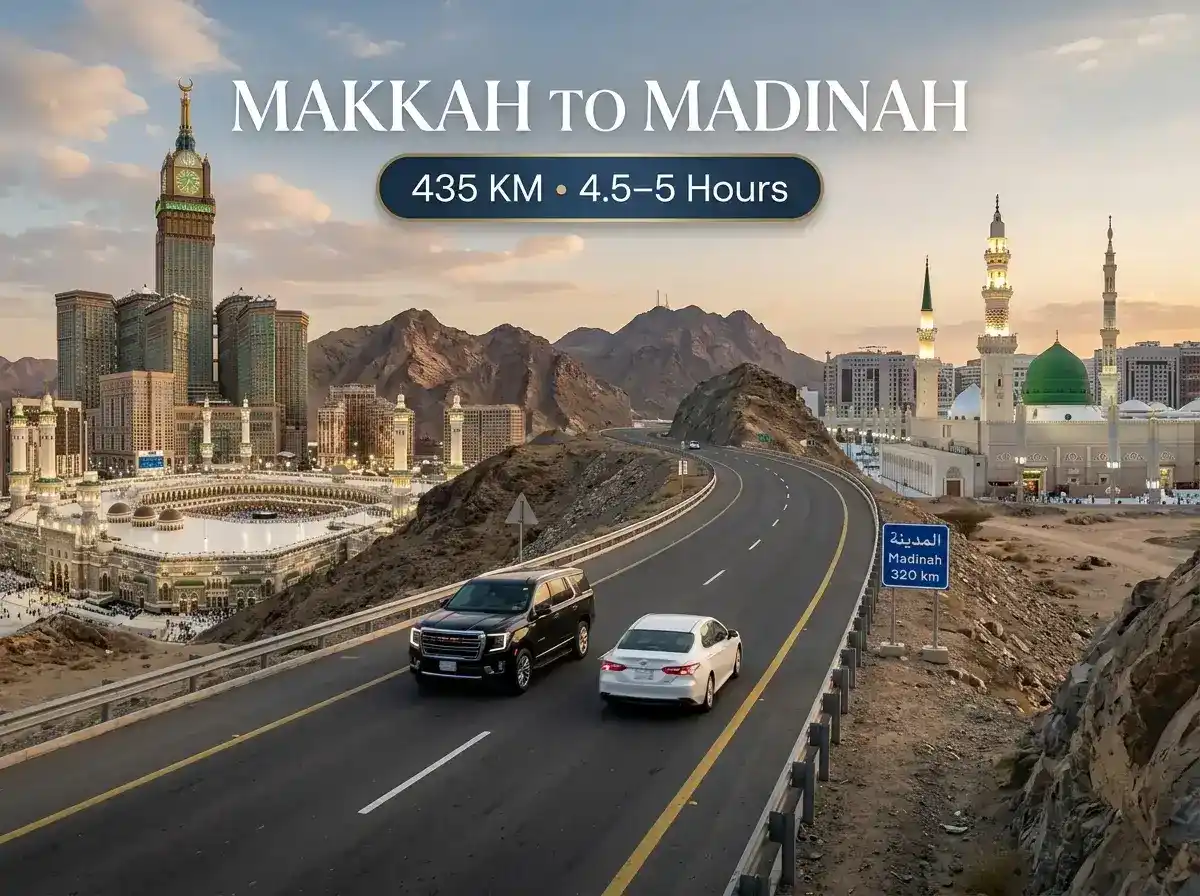
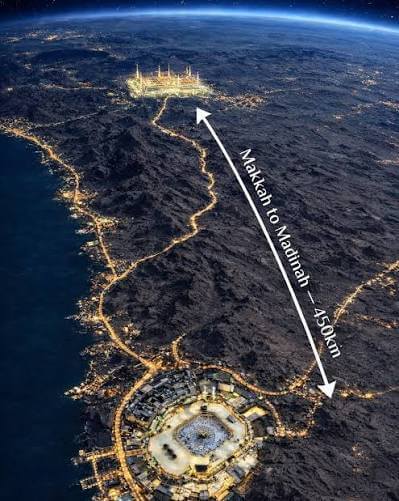
A private taxi from Makkah to Madinah covers a road distance of roughly 435 to 450 kilometers and takes about 4 to 4.5 hours of driving time under normal conditions. With a single rest stop for prayer, food, or fuel – which most travelers take at least once – the full door-to-door journey usually runs closer to 5 to 5.5 hours.
That’s the short answer. The rest of this guide explains where that range comes from, what the road itself looks like, where taxis actually stop along the way, and how to time your departure so the journey is as comfortable as possible.
Makkah to Madinah Distance and Travel Time at a Glance
| Detail | Approximate Figure |
|---|---|
| Road distance | 435–450 km (some routes and pickup points measure up to 462 km) |
| Pure driving time | 4–4.5 hours |
| Total door-to-door time (with one rest stop) | 5–5.5 hours |
| Main route | Hijrah Highway (Highway 15) |
| Direction | Distance and time are essentially the same in both directions (Makkah–Madinah and Madinah–Makkah) |
These figures assume normal daytime traffic and typical road conditions. During Ramadan, Hajj season, or public holidays, the same drive can take noticeably longer simply because more vehicles are on the highway at the same time.
Why the Travel Time Range Varies
If you search for this distance, you’ll notice different sites quote slightly different numbers — some say 435 km, others 450 km, and a few go as high as 462 km. This isn’t inconsistency; it reflects a real variable: where exactly you start and end.
Makkah and Madinah are both large cities, and hotels are spread across different districts. A pickup near the Clock Tower or Ajyad in Makkah and a drop-off in the Markaziyah area of Madinah will measure differently than a pickup from a hotel further out toward Aziziyah, or a drop-off near the outskirts of Madinah. The core highway distance between the two cities is consistent; the few extra kilometers on either end come from navigating within each city to your specific hotel.
The same logic applies to time. The 4 to 4.5-hour figure is highway driving time only. Add hotel pickup and drop-off, any rest stop, and normal traffic near both city entrances, and a realistic total is closer to 5 to 5.5 hours from the moment your driver arrives at your hotel to the moment you reach your destination.
The Route: Traveling the Hijrah Highway (Route 15)
Almost all road traffic between the two holy cities travels on the Hijrah Highway, officially Highway 15 — a modern, multi-lane expressway built specifically to handle the heavy year-round flow of pilgrims and other travelers between Makkah and Madinah. Saudi Arabia’s Roads General Authority (RGA) maintains and periodically upgrades this corridor, including seasonal initiatives during Hajj to add extra rest facilities and mobile fuel stations along the way.
The drive itself is straightforward: long, straight stretches of desert highway connecting the two cities, with well-marked exits and consistent road quality. There’s no need to navigate through smaller towns or unpaved sections — the entire route is built as a direct expressway link, which is a large part of why travel time stays fairly predictable outside of peak-season congestion.
A less common alternative is the coastal route through Rabigh and Yanbu, but this adds one to two hours to the trip and is rarely used by taxis unless a specific detour is requested.
Rest Stops Along the Way
Private taxi drivers on this route are familiar with a handful of well-established service stations spaced along the highway, generally every 80 to 120 kilometers. SASCO (Saudi Automotive Services Company) operates some of the more recognized stops, and you may also hear drivers mention specific stations by name, such as those near Wadi Al Fara. The Roads General Authority has also worked with SASCO on seasonal mobile fuel and rest facilities during Hajj to keep the corridor comfortable for high traffic volumes.
What’s Actually at These Stops
A typical highway rest stop on this route includes:
- A small musalla (prayer room) with space and ablution facilities for Salah
- Restrooms, generally maintained to a higher standard than smaller roadside stops elsewhere in the region
- A food counter or small restaurant — usually simple, fast options like sandwiches, rice dishes, and hot and cold drinks
- Fuel pumps, since these stations double as service stations for vehicles making the full intercity run
Cleanliness and amenities can vary somewhat from stop to stop, but the larger, more established stations on this corridor are generally kept to a reasonable standard given the volume of pilgrim traffic they handle.
How Often Taxis Stop
Most private taxi journeys include one stop, usually timed around a prayer time or roughly the midpoint of the drive. Families traveling with children, or travelers who prefer to stretch and pray more than once, sometimes ask for two shorter stops instead. Because a private taxi runs on your schedule rather than a fixed timetable, you can ask your driver to stop when it suits you — for a specific prayer time, a meal, or simply a break — rather than being tied to a bus company’s predetermined rest schedule.
Best Time of Day to Travel by Road
Avoiding the Midday Heat
This part of Saudi Arabia experiences intense desert heat, particularly from late morning through mid-afternoon, especially between late spring and early autumn. While modern taxis are air-conditioned and the highway itself poses no special risk in a well-maintained vehicle, travelers who need to make any stop outside the vehicle — for prayer, food, or a break — will find the experience considerably more comfortable earlier in the morning or later in the evening than in the middle of the day.
A common and practical approach is to depart shortly after Fajr, which lets you complete most or all of the drive before the hottest part of the day sets in. An evening departure, after the peak afternoon heat has passed, is the other commonly preferred window.
Avoiding Peak Traffic Periods
Traffic on the Hijrah Highway is generally light and consistent outside of specific high-volume periods. The exceptions are predictable: the days immediately before and after major Umrah rushes, the lead-up to and aftermath of Hajj, and public holiday periods when large numbers of pilgrims and residents are moving between the two cities at once. If your dates fall within one of these windows, building in extra time — and confirming your pickup time with your driver in advance — is worth doing.
Private Taxi vs. Bus: Does the Vehicle Change Your Travel Time?
The vehicle itself doesn’t change the highway distance, but it does change how the journey feels and how the total time is spent. A scheduled bus or Coaster service runs on a fixed departure time and a fixed rest-stop schedule set by the operator, with a set pickup point rather than your hotel lobby.
A private taxi, by contrast, picks you up directly from your hotel, drives at a pace suited to your group, and stops when you want to stop — for a specific prayer time, a hungry child, or simply because you’d rather not wait for a scheduled break. For families, elderly travelers, or anyone carrying more luggage than a shared vehicle comfortably allows, this flexibility is often the more meaningful difference, since the core 4 to 4.5-hour driving time is largely the same regardless of vehicle type.
Planning Your Travel Day
A few practical points worth keeping in mind when you build your schedule around this journey:
- Build in the full 5 to 5.5-hour window, not just the 4-hour highway figure, when planning check-out and check-in times at your hotels.
- If you have a specific prayer time you’d like to observe at a rest stop, mention it to your driver when booking so the stop can be timed accordingly.
- During Ramadan, Hajj season, or major holidays, ask about realistic timing in advance rather than assuming the standard 4 to 4.5-hour figure will hold.
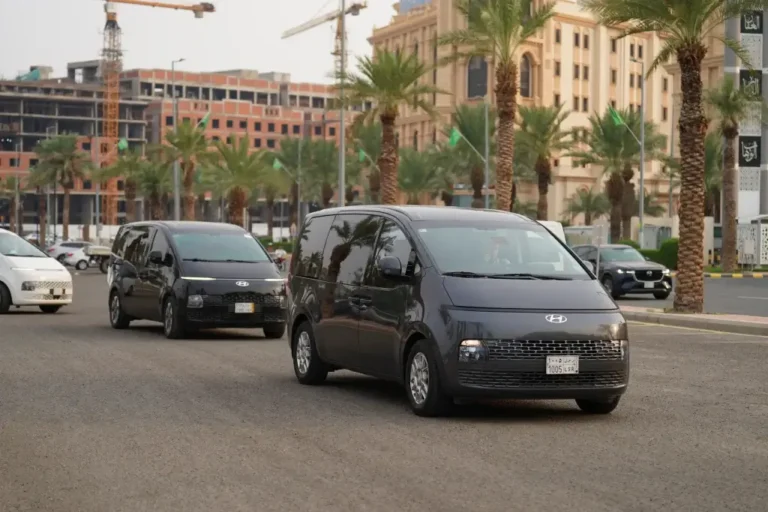
- If you’re traveling with a larger family or group, a vehicle like a Hyundai Staria, Toyota Hiace, or GMC Yukon offers more comfortable space for the multi-hour drive than a standard sedan.
If you’d like to arrange a private hotel-to-hotel transfer with a driver who can time rest stops around your prayers and your family’s pace, Makkah to Madinah Taxi can be reached directly on WhatsApp at +966574915372 to confirm your travel date and vehicle.
FAQs
1. How many kilometers is it from Makkah to Madinah?
The road distance is approximately 435 to 450 kilometers, though it can measure slightly higher or lower depending on your exact pickup and drop-off points within each city.
2. How long does it take to drive from Makkah to Madinah?
Pure highway driving time is about 4 to 4.5 hours. Including a rest stop and hotel pickup/drop-off, the full journey typically takes 5 to 5.5 hours.
3. Is the distance the same from Madinah to Makkah as from Makkah to Madinah?
Yes, the highway distance and driving time are essentially the same in both directions, since the journey follows the same Hijrah Highway route either way.
4. What route do taxis take between Makkah and Madinah?
Almost all private taxis use the Hijrah Highway, also known as Highway 15, a direct multi-lane expressway connecting the two cities.
5. Do taxis stop on the way from Makkah to Madinah?
Most private taxi journeys include one stop, usually at a highway service station with a prayer room, restrooms, and food options. You can request the timing and number of stops when booking.
6. What facilities are available at highway rest stops on this route?
Established stops, including those operated by SASCO, typically include a small prayer room, restrooms, a food counter or simple restaurant, and fuel pumps.
7. What is the best time of day to travel by road from Makkah to Madinah?
Many travelers prefer departing shortly after Fajr or in the evening, to avoid the intense midday heat that’s common in this region for much of the year.
8. Does traffic affect travel time on this route?
Traffic is generally light and predictable outside of peak periods such as the days around Hajj, heavy Umrah season, and major public holidays, when extra time should be planned for.
9. Is the drive from Makkah to Madinah safe?
The Hijrah Highway is a modern, well-maintained expressway built specifically for this corridor, and is used daily by large numbers of pilgrims and residents.
10. Is a private taxi faster than a bus?
The highway driving time is similar for any vehicle, but a private taxi lets you skip a bus’s fixed schedule and choose your own pickup time, rest stops, and pace — which often makes the overall trip smoother rather than shorter.
11. Can I request a specific number of rest stops?
Yes. Because a private taxi runs on your schedule, you can ask your driver in advance for a particular prayer-time stop, an extra break for children, or a single non-stop run if you prefer.
12. Is the train faster than a taxi for this route?
The Haramain High-Speed Railway covers the same corridor in roughly 2.5 hours of train time, which is faster than road travel, though it requires travel to and from the train stations on each end and has luggage limits that a private taxi doesn’t.
13. Will Ramadan or Hajj season change the travel time?
Yes. During these periods, higher traffic volumes on the highway and at rest stops can extend the total journey time beyond the standard 5 to 5.5-hour estimate.
14. Can families and groups book a larger vehicle for this route?
Yes. Vehicles such as the Hyundai Staria, Toyota Hiace, and GMC Yukon are commonly used for this journey and offer more space and comfort than a sedan for a 4-plus-hour drive.
15. How do I book a private taxi for this journey?
You can arrange a hotel-to-hotel private transfer by contacting Makkah to Madinah Taxi on WhatsApp at +966574915372 to confirm your travel date, pickup location, and preferred vehicle.