
Madinah Ziyarat Taxi Tour: Top 10 Historical Places to Visit Beyond Al-Masjid An-Nabawi
Most pilgrims spend their days in Madinah moving between their hotel and Al-Masjid an-Nabawi, and that is enough on its own. But a short distance outside the mosque’s courtyards is a cluster of sites that carry as much history as the mosque itself — the first mosque ever built in Islam, the battlefield where the Prophet’s ﷺ uncle was martyred, the mosque where the direction of prayer changed forever. Visiting them is commonly called Ziyarat (زيارة), meaning “visit,” and it’s normally done as a single half-day trip by private car rather than on foot, since the sites are spread across Madinah rather than clustered in one walkable area.
This guide walks through the ten places most Ziyarat tours cover, in a sensible visiting order, followed by what the trip actually costs and how long to plan for it.
What “Ziyarat” Means in Madinah
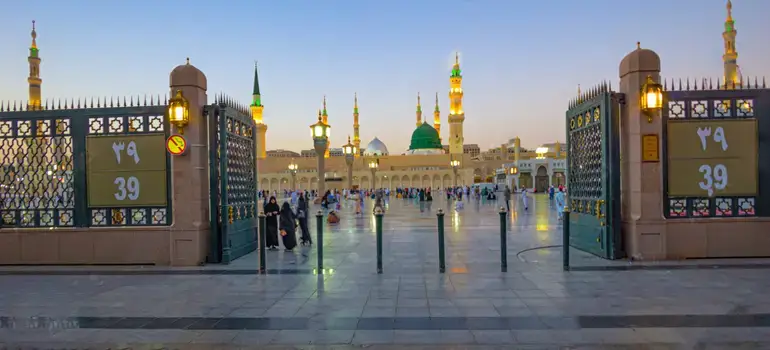
Ziyarat simply means a visit to a place of historical or religious significance. In Madinah, it almost always refers to a loop of sites connected to the Prophet’s ﷺ life after the Hijrah (migration) from Makkah – his first mosque, the battle he fought to defend the city, and the mosque where a Qur’anic verse changed the Qiblah. None of these visits are obligatory acts of worship the way Umrah rituals are; they are opportunities for reflection, and most guides simply recommend two rak’ahs of prayer where appropriate and quiet respect at burial sites.
The Top 10 Historical Places
1. Masjid Quba
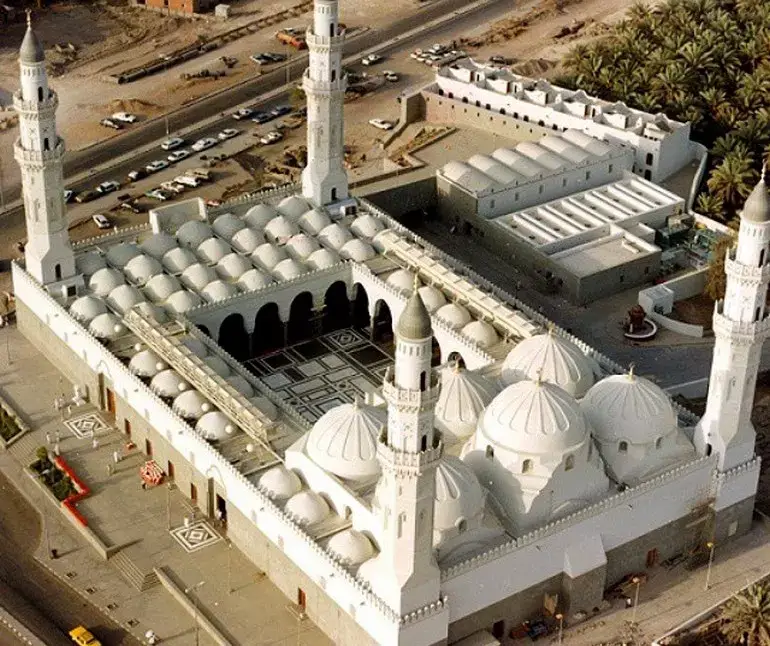
Masjid Quba is widely regarded as the first mosque built in Islam, constructed by the Prophet Muhammad ﷺ in the earliest days after arriving in Madinah following the Hijrah in 622 CE. It sits on Hijra Road roughly 3.5 km south of Al-Masjid an-Nabawi, in what was originally the separate village of Quba. Many pilgrims pray two rak’ahs here, a practice associated with a hadith describing it as equivalent in reward to performing an Umrah.
Quba is currently the subject of the King Salman Project, Saudi Arabia’s largest-ever expansion of the mosque, launched in 2022 to grow it roughly tenfold — from about 5,035 square metres to 50,000 square metres, raising capacity toward 66,000 worshippers and reviving 57 surrounding historical sites (wells, farms, and paths once used by the Prophet ﷺ). Because construction is ongoing, access points and nearby parking can shift from what older photos or guides show, which is one reason a driver who knows the current layout is genuinely useful here rather than just convenient.
2. Masjid Al-Qiblatayn (The Mosque of Two Qiblahs)
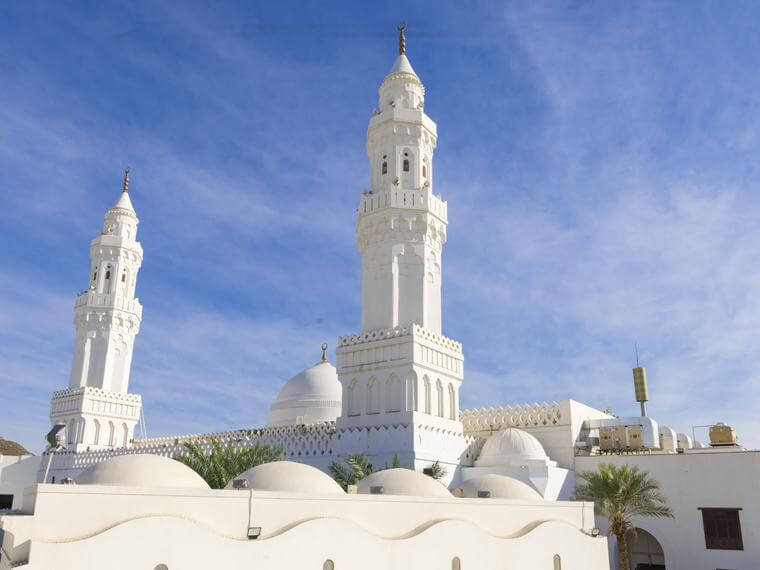
Masjid Al-Qiblatayn marks the spot where, according to tradition, the Prophet ﷺ was leading prayer when the revelation came instructing Muslims to face the Kaaba in Makkah instead of Jerusalem. Mid-prayer, the congregation turned to face the new direction — giving the mosque its name, “the mosque of the two Qiblahs.” It’s one of the few mosques historically built with two mihrabs to mark both directions, though the modern rebuilt structure now follows a single Qiblah like any other mosque.
3. Seven Mosques (Sab’a Masajid)
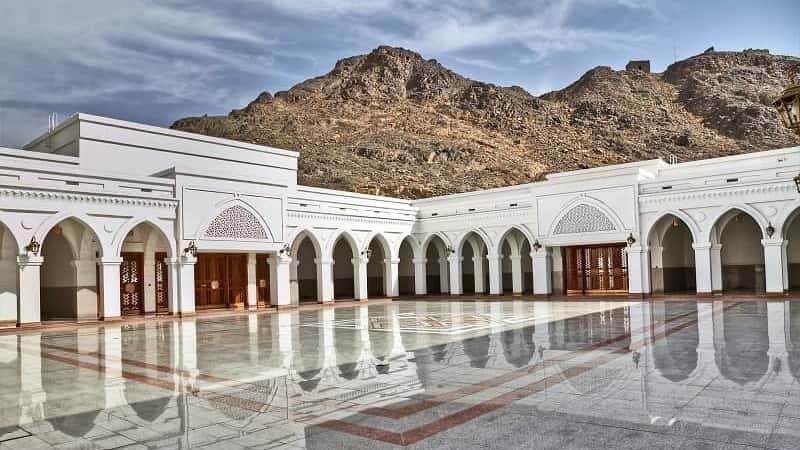
This is a cluster of small mosques and markers associated with the Battle of the Trench (Ghazwat al-Khandaq), fought in 5 AH when the Prophet ﷺ ordered a defensive trench dug around Madinah to hold off a large confederate army. The mosques mark the positions where the Prophet ﷺ and various companions are believed to have stood or prayed during the siege. They’re usually visited together as one stop, since they sit close to each other near the original trench line.
4. Mount Uhud
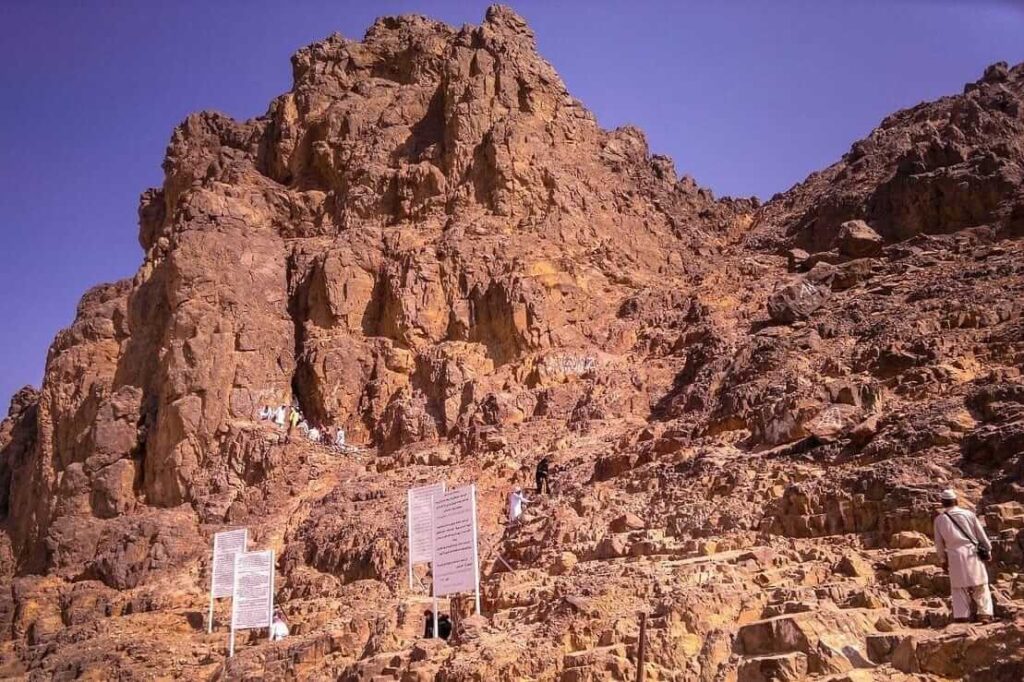
Mount Uhud is a reddish mountain roughly 7 km long on the northern edge of Madinah, and the site of the Battle of Uhud in 3 AH, fought a year after the Muslims’ victory at Badr. It was here that Hamza ibn Abdul Muttalib, the Prophet’s ﷺ uncle known as “the Lion of Allah,” was martyred along with dozens of companions. The mountain itself holds a distinct status in hadith literature as a site the Prophet ﷺ spoke of with particular affection, and it remains the most visited single stop on most Ziyarat itineraries.
5. Jabal Ar-Rumat (The Mount of Archers)
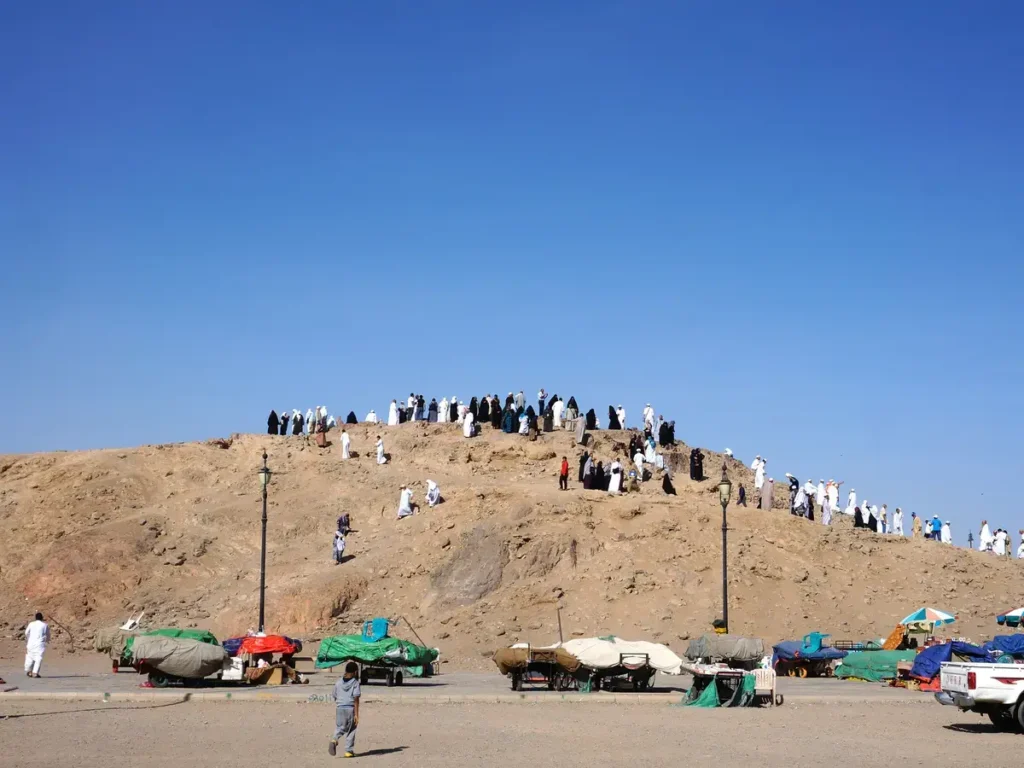
Often confused with Uhud itself, Jabal Ar-Rumat — also called Jabal Aynayn — is a separate, much smaller hill just south of Uhud, divided from it by the graves of the battle’s martyrs. This is where the Prophet ﷺ stationed around 50 archers under Abdullah ibn Jubair with strict instructions to hold their position “whether we win or lose.” Partway through the battle, many archers left their post believing victory was secured, allowing the enemy cavalry to outflank the Muslim army from the rear — a turning point often cited as a lesson in discipline. Some visitors climb the hill for the view over the old battlefield, though scholars note that climbing it isn’t itself a recommended religious practice — the established Sunnah is simply visiting the graves of the martyrs at its base.
6. Martyrs of Uhud Cemetery
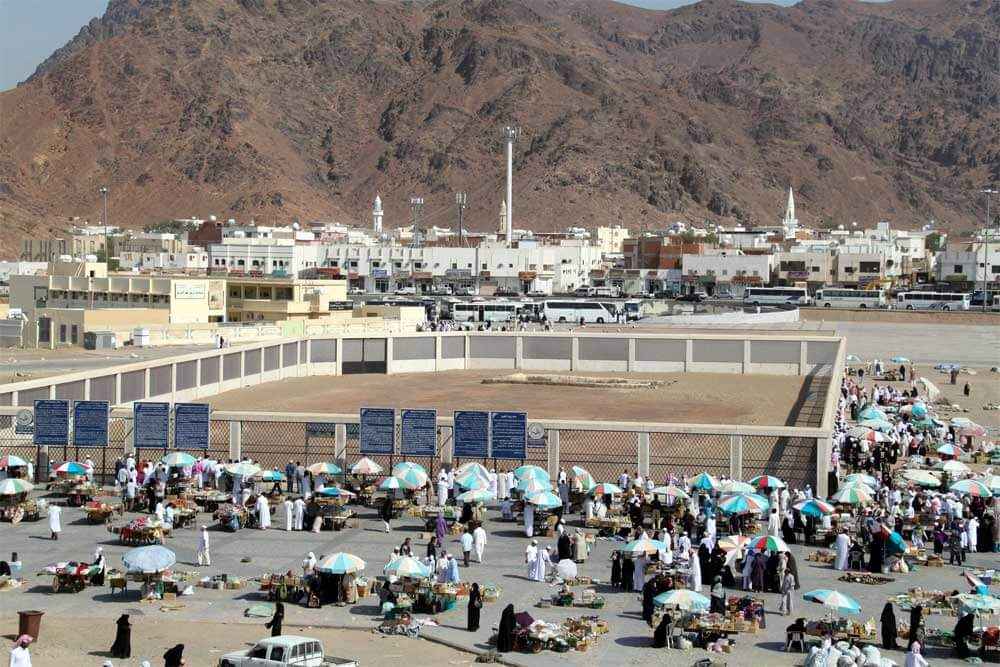
At the foot of Uhud lies the burial site of the roughly 70 companions killed in the battle, including Hamza ibn Abdul Muttalib. It’s treated as a place for quiet visitation and du’a rather than a stop requiring lengthy time, and most drivers build in only a short pause here as part of the wider Uhud stop.
7. Masjid Al-Jumu’ah
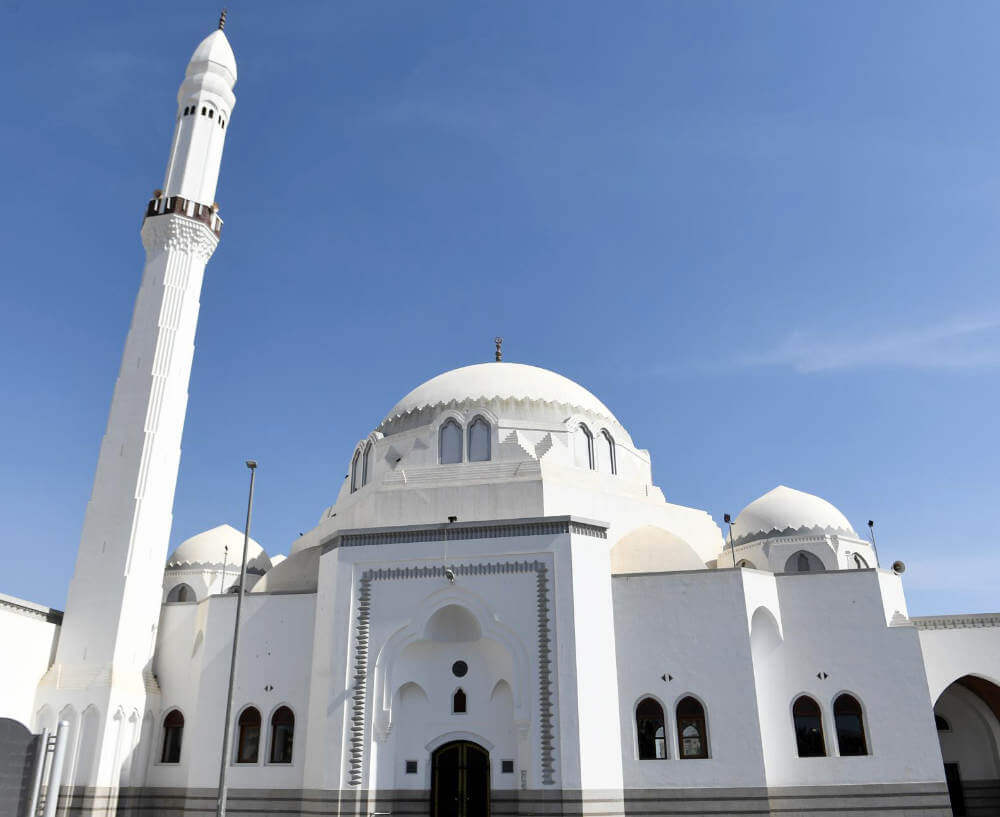
Masjid al-Jumu’ah marks the spot where the Prophet ﷺ is said to have led the very first Friday (Jumu’ah) congregational prayer in Islam, on his way from Quba into the main settlement of Madinah after the Hijrah. It’s a smaller, quieter stop usually combined with the Quba visit given how close the two sites are along the same route.
8. Masjid Al-Ghamamah
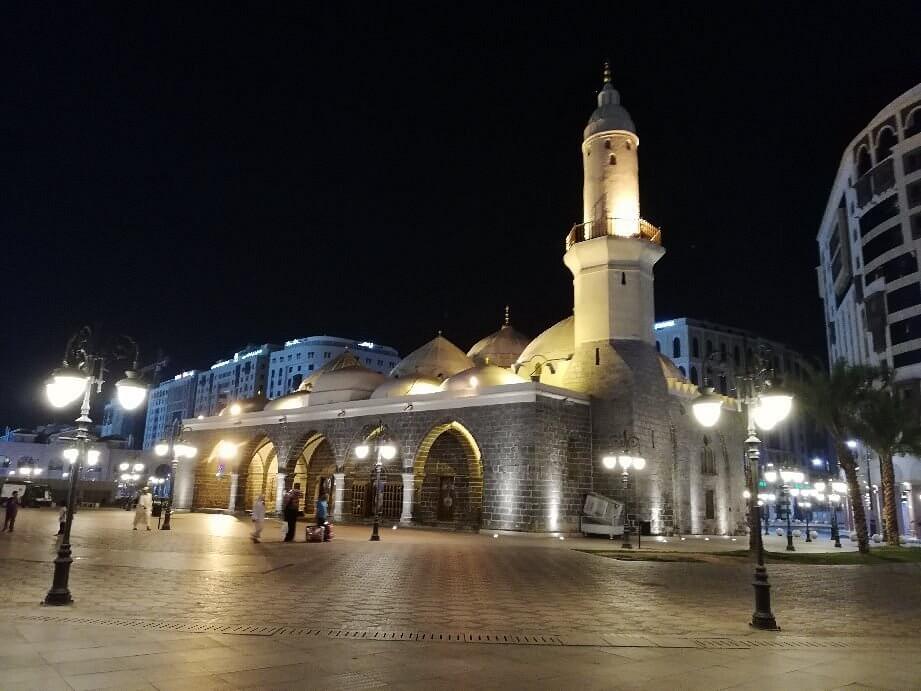
Meaning “the Mosque of the Cloud,” this mosque near Al-Masjid an-Nabawi commemorates a spot associated with an Eid prayer led by the Prophet ﷺ and traditions of rainfall during a time of drought. It’s a smaller historical stop, sometimes visited on the way back toward the hotel rather than as a dedicated detour.
9. Salman Al-Farsi Date Farm
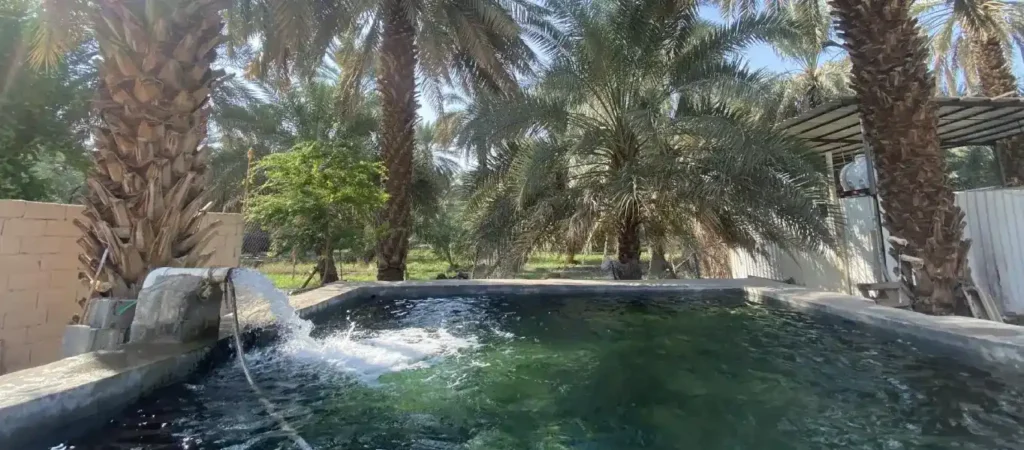
Named after Salman al-Farsi, a companion of Persian origin known for his role suggesting the trench strategy at the Battle of the Khandaq, this stop is a working date farm/garden associated with his story. In practice it has become a favourite closing stop on Ziyarat tours — a relaxed, shaded place to walk among the palms, sample fresh dates, and buy some to take home, after a morning of more solemn historical sites.
10. Jannat Al-Baqi
Jannat al-Baqi is the historic cemetery immediately beside Al-Masjid an-Nabawi, the resting place of thousands of the Prophet’s ﷺ family members and companions. Because it sits right next to the mosque, it’s often visited on foot separately from the vehicle-based Ziyarat loop rather than as a taxi stop — but no list of Madinah’s historical sites is complete without it, and many drivers will point it out or briefly stop nearby if a group hasn’t yet visited. Note that entry inside the cemetery itself is generally restricted; most visitors view it from outside the walls.
How Long Does a Madinah Ziyarat Tour Take?
Most private Ziyarat tours run 3 to 4 hours door-to-door, starting and ending at the hotel. That’s enough time to cover Quba, Al-Qiblatayn, the Seven Mosques, Uhud with Jabal Ar-Rumat and the martyrs’ cemetery, and a date farm stop, with a reasonable amount of time at each — typically 10–20 minutes per smaller mosque and closer to 30–45 minutes at Uhud, since it’s the largest and most visited stop.
A private driver will normally wait with the vehicle at each stop rather than dropping passengers and leaving, so there’s no need to arrange separate pickups between sites. If a group wants to linger somewhere — praying, taking photos, or resting at the date farm — most operators build in reasonable flexibility rather than running a rigid stopwatch tour, though very long unplanned delays at one stop can push back the overall schedule.
Ziyarat Package Pricing by Vehicle
Ziyarat pricing is normally quoted as a flat fee for the whole vehicle and the whole loop, not per person and not per stop. Exact rates vary by operator, season, and how many sites are included, but as a general guide across the market:
| Vehicle | Typical Capacity | Approx. Ziyarat Package (SAR) |
|---|---|---|
| Camry (sedan) | 1–4 passengers | 150–250 SAR |
| Hyundai Staria | 5–7 passengers | 250–400 SAR |
| Toyota Hiace | 8–11 passengers | 300–450 SAR |
| GMC Yukon | 1–6 passengers (luggage-friendly) | 350–500 SAR |
| Toyota Coaster | 12+ passengers | 500–800 SAR |
These ranges can shift with fuel prices, the number of sites requested, and demand during Ramadan or peak Umrah season — always confirm the exact fare and stop list before booking rather than assuming a fixed number applies year-round.
Booking a Madinah Ziyarat Taxi
Ziyarat tours can be arranged in advance or on the same day, usually with a hotel pickup time agreed beforehand. Because the route touches several stops rather than one destination, it’s worth confirming upfront which of the ten sites above are included, since some operators default to a shorter five- or six-stop version unless a fuller loop is specifically requested.
Payment can typically be arranged in advance, with the balance settled after the tour or on return to the hotel, according to the agreed booking terms. For a Madinah Ziyarat Taxi Tour with a driver familiar with the current Quba Mosque construction area and a clear stop list agreed before departure, bookings can be made directly via WhatsApp at +966574915372.
FAQS
1. What does “Ziyarat” mean in Madinah?
Ziyarat means “visit” and refers to touring the historical sites connected to the Prophet’s ﷺ life in Madinah – mosques, battle sites, and cemeteries — beyond Al-Masjid an-Nabawi itself.
2. How many places are usually included in a Madinah Ziyarat tour?
Most private tours cover six to eight core stops from the list of ten: typically Masjid Quba, Masjid Al-Qiblatayn, the Seven Mosques, Mount Uhud, Jabal Ar-Rumat, the Martyrs’ Cemetery, and a date farm. Jannat al-Baqi is usually visited separately on foot since it’s beside Al-Masjid an-Nabawi.
3. How long does a Madinah Ziyarat taxi tour take?
Around 3 to 4 hours door-to-door from the hotel, depending on how many stops are included and how long the group spends at each one.
4. How much does a Madinah Ziyarat taxi cost?
Package pricing varies by vehicle, roughly 150–250 SAR for a sedan up to 500–800 SAR for a larger coaster, quoted as a flat fee for the whole vehicle rather than per person.
5. Is Masjid Quba still open to visitors during its expansion?
Yes, the mosque remains open for prayer during the King Salman Project expansion, though access points and nearby parking may differ from older photos or guides due to ongoing construction.
6. What is the difference between Mount Uhud and Jabal Ar-Rumat?
Mount Uhud is the large mountain where the main battle took place; Jabal Ar-Rumat (the Mount of Archers) is a separate, smaller hill just south of it, where the Prophet ﷺ stationed archers during the battle. They’re often visited as one combined stop but are two distinct locations.
7. Is it necessary or recommended to climb Jabal Ar-Rumat?
No – visiting the graves of the Uhud martyrs at its base is the established practice; climbing the hill itself is a common custom rather than a recommended religious act.
8. Can Ziyarat sites be visited on foot instead of by taxi?
Not practically — the sites are spread across Madinah, several kilometres apart, so a vehicle is the normal way to cover them in one trip. Jannat al-Baqi, right beside the mosque, is the main exception.
9. Do Ziyarat taxis wait at each stop?
Yes, private drivers typically wait with the vehicle at each site rather than dropping passengers and leaving, so there’s no need to arrange separate transport between stops.
10. Can families and groups book together?
Yes – vehicle options range from a 4-seat Camry for small families up to a Coaster for larger groups, all quoted as one fixed fee for the vehicle rather than per person.
11. Is Jannat al-Baqi included in the taxi tour?
Usually visited separately on foot since it sits directly beside Al-Masjid an-Nabawi; entry inside the cemetery itself is generally restricted, and most visitors view it from outside the walls.
12. What should I know about Salman Al-Farsi’s date farm stop?
It’s typically the last, most relaxed stop on the tour — a working date garden associated with the companion Salman al-Farsi, where visitors can walk among the palms and buy fresh dates.
13. Can the Ziyarat tour be combined with airport or Makkah transfer bookings?
It’s usually booked as a separate half-day trip, but many pilgrims arrange it during their stay in Madinah alongside their intercity taxi to or from Makkah.
14. Is a guide included, or just a driver?
This varies by operator – some provide drivers with historical knowledge of each site, others provide transport only. It’s worth confirming this detail before booking if historical commentary is important to you.
15. When is the best time of day to do the Ziyarat tour?
Mornings after Fajr or the period between Dhuhr and Asr are generally the most comfortable, avoiding the midday heat and allowing enough daylight to see the outdoor sites like Uhud and Jabal Ar-Rumat clearly.